
About Us
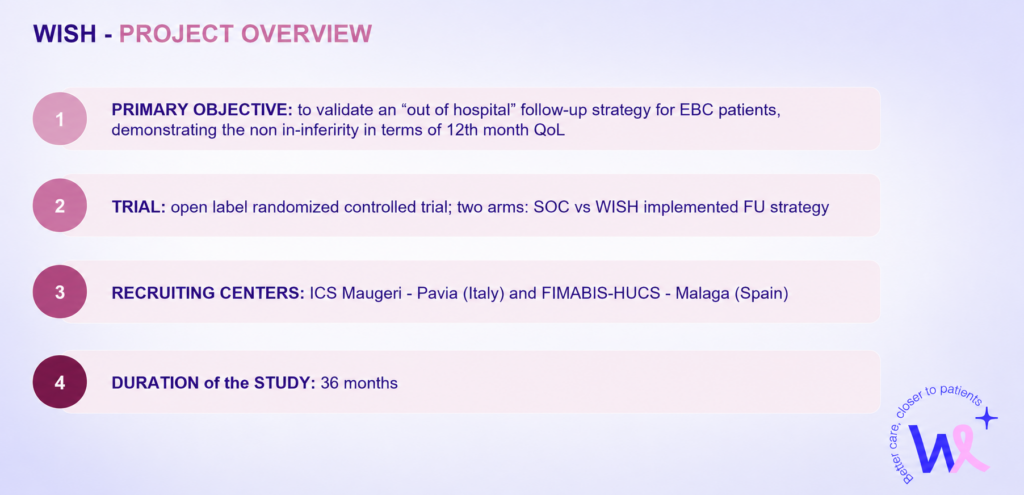
WISH project is developing and evaluating a new approach to follow-up for women with hormone-receptor-positive, HER2-negative early breast cancer who are receiving adjuvant hormonal treatment.
WISH brings follow-up closer to primary and community care while maintaining a strong connection with oncology services. Through a shared digital platform, women, general practitioners and oncology teams will be able to contribute to a personalised follow-up pathway.
Our Vision
WISH envisions a future in which every woman receiving hormonal treatment after early breast cancer has access to coordinated, personalised and continuous support.
The project is developing and testing a shared-care approach that connects women, general practitioners and oncology teams through a common follow-up pathway supported by digital tools. Women will be able to report symptoms and changes in their well-being, follow personalised health goals and remain actively involved in their care.
Healthcare professional teams remain connected and available when specialist input is needed. By combining clinical expertise, primary care, patient-reported information and lifestyle support, WISH aims to create a model of follow-up that is more responsive to women’s needs, more efficient for healthcare systems and adaptable across different European settings.
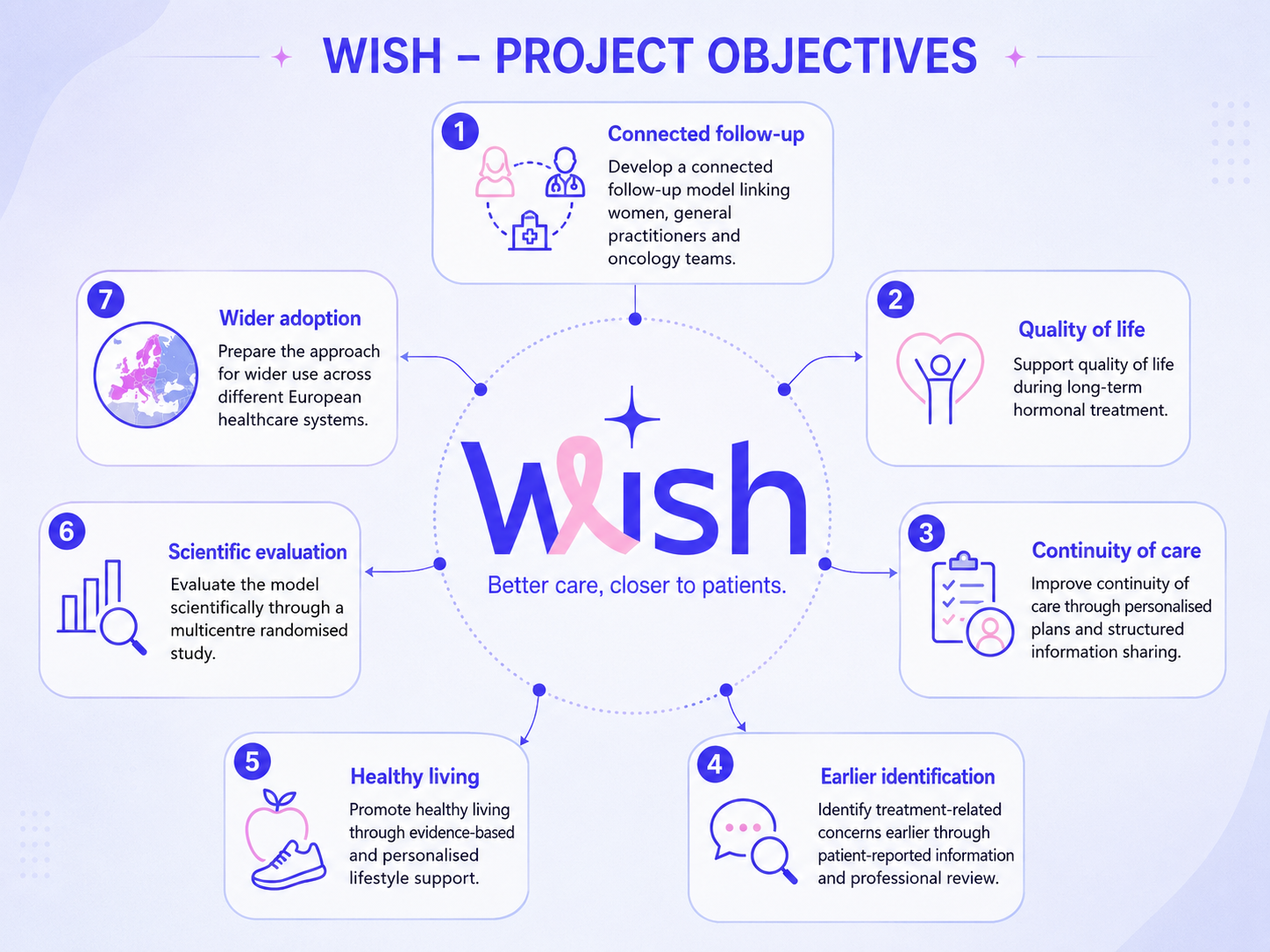
PROJECT OBJECTIVES
Hormonal treatment may continue for several years. During this period, women may experience treatment-related effects and changes in physical, emotional and social well-being.
Traditional follow-up is often organised around periodic hospital visits, making it difficult to identify and address all needs as they arise.
There is therefore a need for a more connected, accessible and person-centred model of follow-up—one that supports women throughout treatment, strengthens collaboration between healthcare professionals and brings appropriate care closer to home.
WISH WORK PACKAGES
WISH NETWORK
CONSORTIUM
Italy

Lithuania

Norway


Spain
Switzerland
WHO MAY BENEFIT
- Women receiving hormonal treatment after early breast cancer
- Oncologists and hospital teams
- General practitioners and primary care teams
- Families and caregivers
- Healthcare organisations and health systems
- Patient organisations
- Researchers and digital health developers
- Policymakers and healthcare decision-makers